
I’ve threatened to write a post about how I practice for a while, and I think now is the time. I’m preparing right now for a performance of György Ligeti’s Clocks and Clouds with the New York Philharmonic, and I thankfully was able to get my hands on the music before rehearsals have begun. I flipped through the score and my eyes bugged out when I saw this:
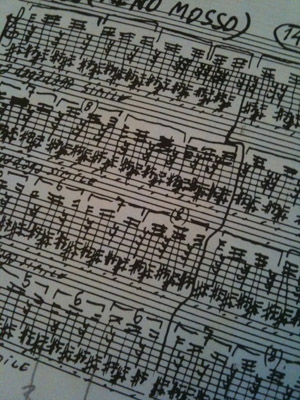
I’m not a fan of reading manuscript, especially in the age of digital music. Even though the score was published by Schott, who normally prints lovely, legible music, I have a feeling there hasn’t exactly been enough demand since its premiere in 1973, for them to go through the trouble of republishing a proper, printed version.
That being said, I think I should be able to at least read what I have to sing. That squiggly line you see going through the staves? That’s the bar line. And with everything so squished together, it’s essentially impossible to see what beat goes where. This is a sight-reader’s nightmare.
After I posted this picture onto Facebook, several of my friends suggested that I transcribe it into Finale to make it more legible. With over 200 measures of 12 staves each, I wasn’t too keen on transcribing the whole thing, but it would certainly help me learn the music if I transcribed some of the harder bits.
Here is the same passage, only legible (click on image to enlarge):
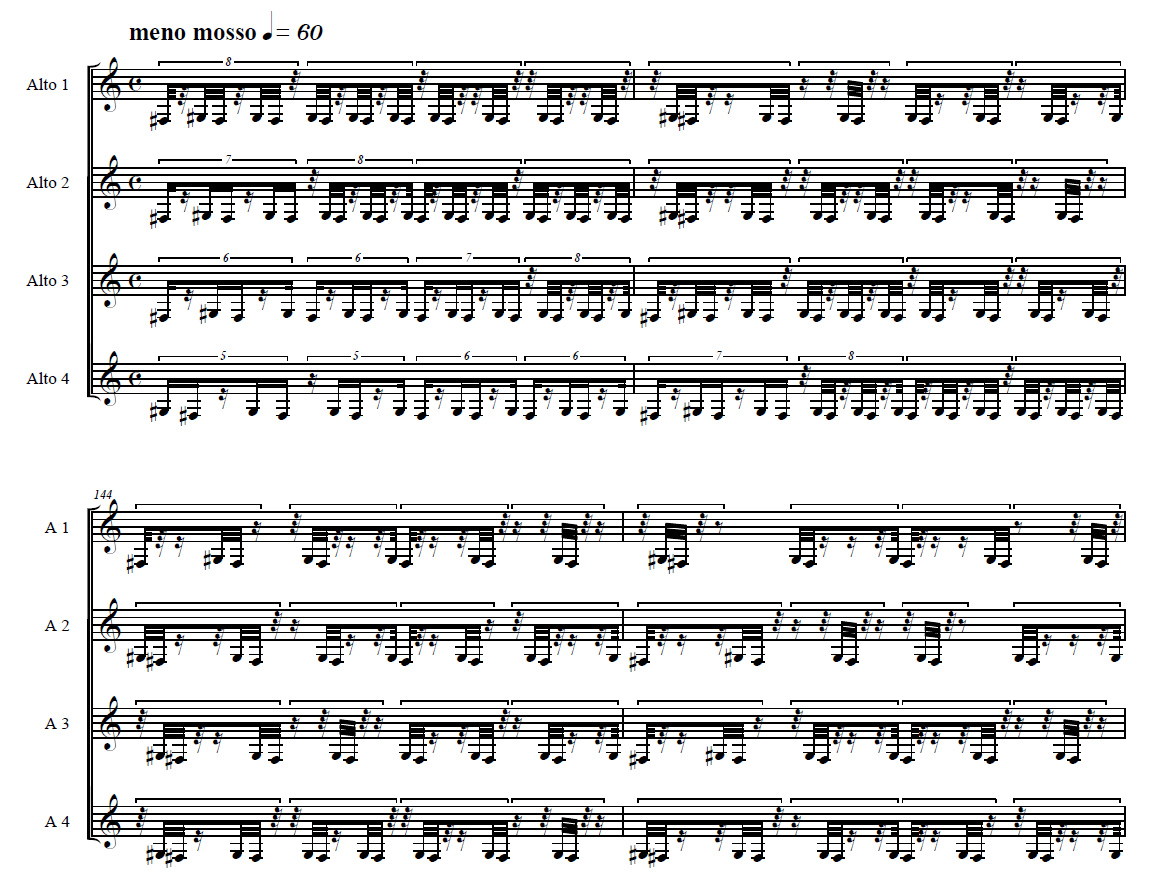
Now that you can actually see it, you may notice that each part only sings two notes: G# and F#. The trick, therefore, is not trying to find the notes themselves, but making sure you sing those notes at the right time. This is what all the parts sound like together:
[audio: http://www.supermaren.com/Music/Clocks_Clouds_excerpt_piano.mp3]It’s not so easy to tell which part is yours, is it? In situations like this, I like to use a feature on Finale that changes the instrument a particular staff is playing. Since I’m singing Alto 2, I’ve switched my part to “Oboe,” and all the other parts to “Choir Aahs” (very cheesy MIDI sounds, I know, but they do the trick). This is what the same passage sounds like, only with my part pulled out of the texture:
[audio: http://www.supermaren.com/Music/Clocks_Clouds_excerpt_oboe.mp3]I practice like this all the time when I’m at my computer, especially with difficult passages like this. I can also turn on a click track to remind me where the beats are, and I can play different passages at different speeds, depending on what I want to target during my practice session.
I don’t only use this technique with difficult-to-read music; I am also a terrible pianist, and I can’t afford to pay a coach every single time I want to rehearse something with accompaniment, so I use Finale to practice my regular rep as well (I’ve written about my accompaniment tracks here).
I do happen to have several very useful skills in the singing world: 1) I’m a good sight-reader, and 2) I have perfect pitch. That means that most of the time, I can show up to the first rehearsal, pick up the music, and sing what’s on the page without very many mistakes the first time around. But I’m certainly not perfect, and when I can get prepare my part ahead of time, it makes the entire rehearsal process go more smoothly.
So, that’s my “process,” such as it is. Feel free to ask questions in the comments section. And if you’re just starting out and need some advice: learn how to sight-read. That one skill will make you ten times more marketable than any other tool in your vocal toolbox.

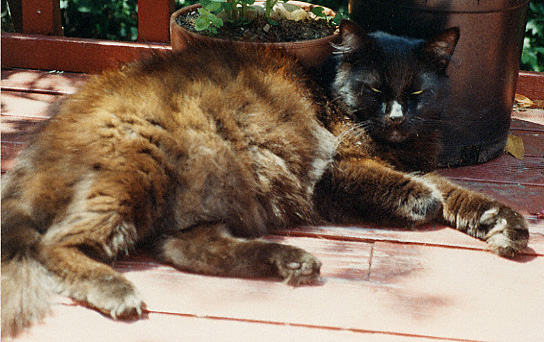 As I grew up, he was my best friend. He comforted me through convalescence after a broken collarbone, a dislocated knee, and numerous sprained ankles. He loved watching me garden, and did his best to kill any bugs, newts, or birds that got in my way. His favorite napping spots were the porch, the laundry basket, and the roof (which he reached by climbing the plum tree that grew next to our house). He was incredibly intelligent, and learned how to open the sliding glass door for himself to let himself out.
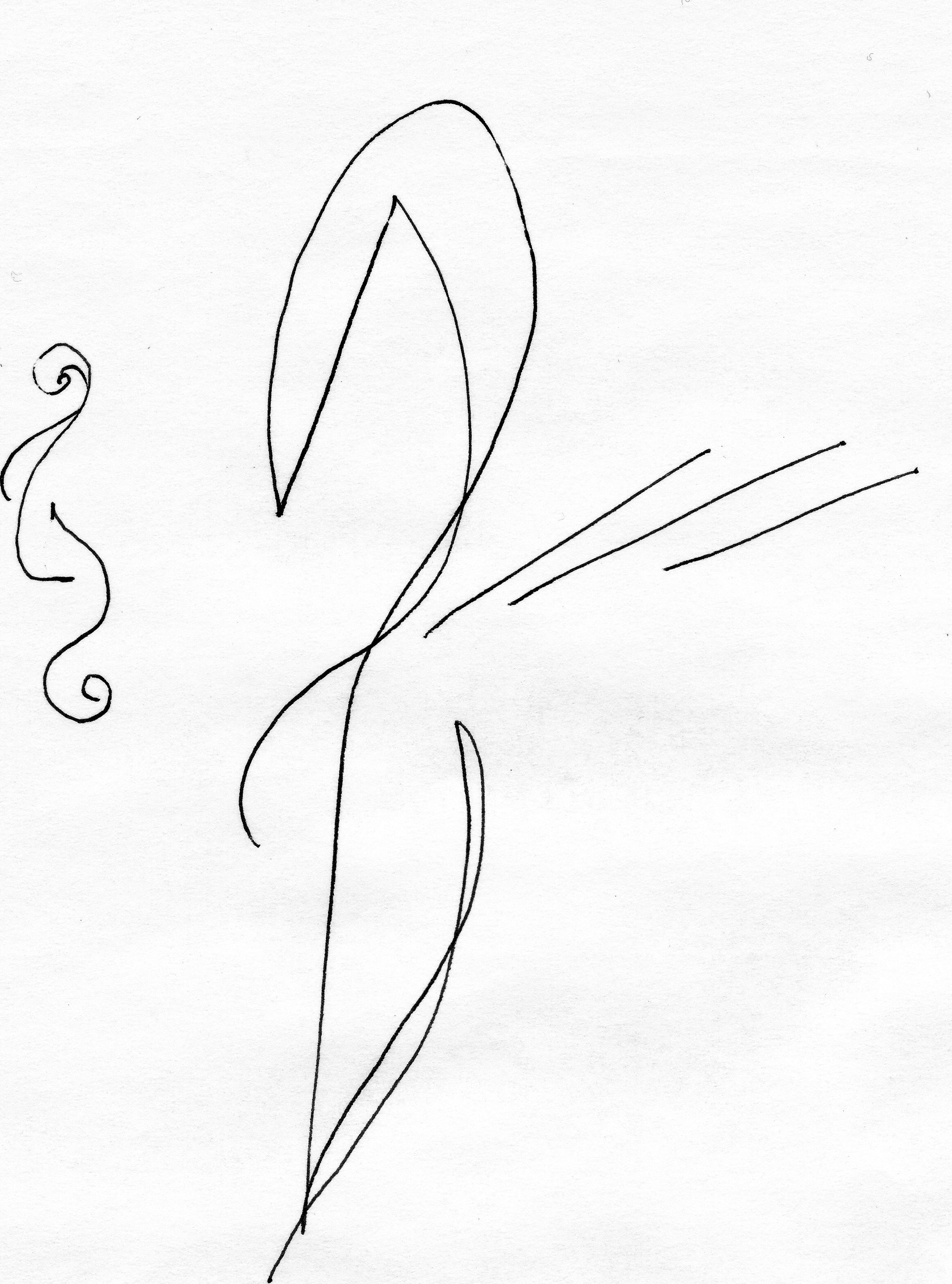 Remembering a high school art class where I had drawn a still life of calla lilies, I kept the image of a single calla lily in my mind and started following the curves of the flower in my head as I put the pen to paper. Once I lifted my pen up, however, I realized the image was beginning to become diffuse in my mind’s eye; not only could I not remember what I was drawing, but I didn’t know where my pen was in relation to the paper.
 This afternoon, I had a very productive conference call with two friends who had decided to join me in my


 I jokingly posted this tweet on New Year’s Eve, and unfortunately (but not surprisingly) I didn’t win the lottery.